Why Buy-In Isn’t Enough to Make Change Happen

Everyone agrees with the strategy. So why does nothing change? Agreement isn’t commitment, and commitment doesn’t guarantee action. Explore why leaders need to move beyond securing buy-in and start creating the ownership, influence and conditions that make change happen.

Read More »

The problem with optimism. 

We encourage people to be optimistic and believe in their ideas. Yet when someone questions our assumptions, it can feel like criticism. What if challenging what we believe isn’t pessimism, but the key to making meaningful progress?

Read More »

Move first

Smart people spend an unreasonable amount of time waiting for clarity. The thinking goes… – More information – More planning – More confidence It makes

Read More »

You Can’t Schedule Your Way Out of a Systems Problem

Time blocking assumes the problem is a shortage of hours — but creative thinking often needs a different kind of time altogether. Drawing on the hare brain/tortoise mind distinction from Innovation in Action, this piece looks at why reflection and incubation get crowded out by work that proves its value faster, and sets out four conditions — space, psychological safety, broken routines, and the right balance of autonomy and direction — that protect the slower thinking creativity depends on.

Read More »

You Don’t Have to Build the Thing

A customer once rejected Matt Scott’s product for being the wrong size – not broken, just wrong. It’s the kind of assumption nobody thinks to test until it’s already built. Matt shares why the fastest way to learn what customers actually want isn’t building an MVP, it’s testing the assumption first – from a mis-sized widget to a client renting surfboards out of a van with a handwritten sign.

Read More »

Beachhead before buy-in

Most change leaders push for buy-in from everyone at once and watch resistance kill the initiative before it has anything to show. The research says otherwise: you only need the right minority. Here’s how to find them.

Read More »

Your competitive advantage has an expiry date

Business models once lasted 75 years. Now they last five to eight years. Dr. Nadya Zhexembayeva has spent her career researching why systems fail and how organisations can use disruption to move forward rather than be destroyed. Her verdict: most organisations aren’t failing from lack of effort — they’re running tools designed for a world that no longer exists.

Read More »

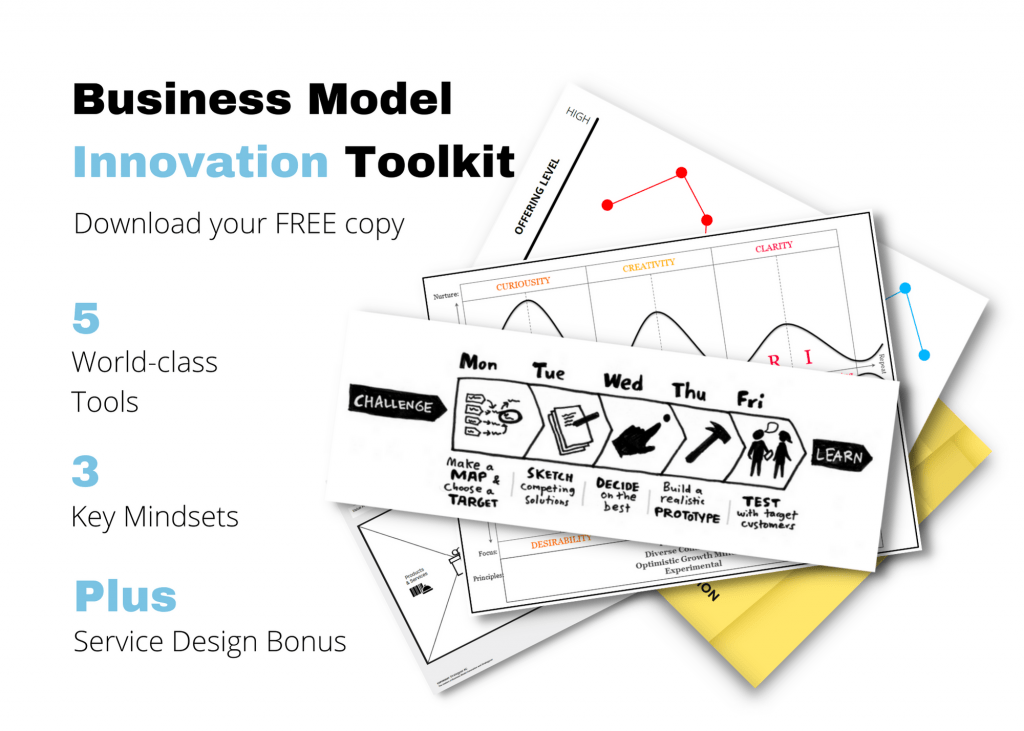
FREE DOWNLOAD

BUSINESS MODEL INNOVATION TOOLKIT

Get your copy of five leading business innovation tools, three key mindsets, a BONUS service design download that will help you to reinvent businesses, products and services that your customers will love and your competitors will envy.